

作者彙整: Javy Gwaltney
Keep Newcomer-Friendly Sequels Coming

I turned 30 this year and am experiencing a sort of quiet realization that will be familiar to a lot of folks pondering their age: time is a super valuable resource. The scarcity of the time I have to myself is after all the reason I didn’t play Kingdom Hearts 3 when it released earlier this year, mostly because everyone kept saying you had to play through 100-plus hours of content before you even started the game to get the most out of it. I was happy that long-time series fans received the quality game they had been waiting so many years for, but the cost of investing myself in the series to get to that point just wasn’t worth it. That’s not a knock against Kingdom Hearts, but more of a reflection of where I’m at in my life and what I look for in gaming experiences.
Cue Devil May Cry 5.
Before I loaded up DMC5, I’d only played Ninja Theory’s reboot before, and had not touched any of the mainline series games. I was intrigued by the look of the fast-paced action gameplay in the trailers for 5 and what my colleagues had been saying about the game in their various write-ups. I asked our reviews editor, Joe Juba, who reviewed the game if it was the sort of game you could just dive into without playing any of the others. I promptly picked it up and started playing it when I got home.
After a brief video that explains the character relationships and the storyline for Devil May Cry up to this point, 5 loads you immediately into the action and it’s frantic as hell. There are gothy dudes who look like they just walked out of Hot Topic circa 2005 wielding big guns and bigger swords and fighting demons. One guy reads Shakespeare from a little notebook right before commanding his panther to rip the mandibles off of a giant demon mantis thing. Entire buildings are covered in slime and oozing blood and, well, it’s just a lot, my friends. A lot.
But not in a bad way. Devil May Cry 5 is so dedicated to its over-the-top antics and thrills that while it does pay respect to the narrative threads running throughout the series, focusing on Nero and Dante’s relationship of begrudging respect, it’s also essentially a standalone game in the ways that matter. I devoured the game in three sittings. As I launched foes into the air with sharp uppercuts and then blew them apart with a literal bazooka, a huge grin broke out across my face. Whatever concerns I had about being overwhelmed by DMC’s hefty amount of lore evaporated.
I think the best point of comparison here might be The Fast and The Furious film franchise – an epic saga about family and speeding that can also be divided into enjoyable standalone films. Do you need to watch the first four Fast and the Furious movies to get the most out of Fast Five and understand the characters’ relationships to one another? Technically, yeah, but Fast Five also functions by itself as a ridiculously enjoyable movie. You can load it up, watch it without context, and have a hell of a time. And it’s that sort of setup that I appreciate in video game sequels.
I love when it feels like a game has gone out of its way to ease me into its world and Devil May Cry 5 does just that with its intro video and focus on action over building a story that really mines the depths of who these characters are. I mean, let’s be real here: this is a game about bonking demons over the head with swords and then blasting their faces off in cool slow-mo. The barrier for entry should not be high and I’m glad that Capcom has made it so.

Another sequel I’ve enjoyed recently is The Division 2 (our review here). I did technically play a little bit of the first game before getting annoying by its lackluster shooting, but that amounted to an hour at the most. Alongside moving locales, The Division 2 wisely makes its story standalone. “A devastating biological terror has reduced Washington DC to a city of warring factions you need to bring to order” is a super simple premise to understand and a fantasy that the game does a great job of turning into a playground for you to inhabit. Other recent sequels that take their designation as a chance to bring in new players as well as enthralling fans of the previous games: Resident Evil 7, Red Dead Redemption 2, Yakuza Kiwami 2, and Valkyria Chronicles 4.
Of course, not every sequel needs to be accessible. Sometimes the very nature of where the series is at and what the entry is going for means that a game has to be pretty inaccessible. I think Kingdom Hearts III fits that bill pretty nicely. Wolfenstein II: The New Colossus, one of my favorite video games of all time, is also pretty inaccessible to someone who hasn’t played The New Order and I think a large part of the reason those games work well is because it’s a straight up continuation of the fascinating characters the first game introduced. To interfere with that by engaging people who didn’t play the previous entry would probably be to The New Colossus’ detriment. So please don’t think I’m saying that every sequel should be accessible.
However, I am pleased that the vast majority of sequels I’ve played over the past year or so, including sequels to games I’ve never touched, have been very newcomer friendly. It’s a wise move for developers and publishers too. After all, I’m already carving out precious time next month to go back and play through Devil May Cry 4 because of how much I enjoyed 5. Making games accessible on all fronts is a great, smart trend that helps build an audience for franchises and one that I hope the industry doesn’t stop embracing anytime soon.
分類: features, IT 資訊科技(信息技术), 熱門新聞 標籤: android, App, apple, Apple Watch, ASUS, Aws, digital game, Facebook, features, Galaxy, game, game footage, Games, Google, Huawei, iMac, IPad, iPhone, macbook, Mobile, news, online game, PC Game, Phone, PlayStation, Samsung, smart phone, Technology, Video, video game, youtube game footage, 多人电子游戏, 手机游戏, 电子游戏, 电子游戏机, 电竞计算机, 超級任天堂, 遊戲, 電競 在〈Keep Newcomer-Friendly Sequels Coming〉中留言功能已關閉
Google’s Stadia Will Support The Xbox Adaptive Controller

Yesterday, Google revealed its foray into the world of video games with the streaming service Stadia. Shortly after the presentation, Microsoft announced that the service would support Microsoft’s Xbox Adaptive Controller (XAC), a peripheral initially designed for Xbox One to accommodate those with various disabilities.
Bryce Johnson, Inclusive Lead at Microsoft, confirmed the announcement on Twitter:
It is great to see @googleaccess supporting devices like the #XboxAdaptiveController in #stadia. Please consider enabling the copiloting of these devices. It will really help gamers with limited mobility a lot. #googleStadia https://t.co/NiB06a5QBb
— Bryce at GDC (@brycej) March 19, 2019
The specifics of how the XAC will function with Stadia’s service is not clear yet but we expect more details to be revealed in the coming month. For more on the XAC, here’s a feature about what the disabled community thinks of the device.
分類: IT 資訊科技(信息技术), 游戲game, 熱門新聞 標籤: android, App, apple, Apple Watch, ASUS, Aws, digital game, Facebook, Galaxy, game, game footage, Games, Google, Huawei, iMac, IPad, iPhone, macbook, Mobile, mobile game, news, Nintendo Switch, online game, PC Game, Phone, PlayStation, PlayStation 2, PlayStation 3, playstation 4, PSP, PSP3, PSP4, Samsung, smart phone, Technology, Video, video game, Wii, Wii U, Xbox, Xbox 360, Xbox 360 Game, YouTube, youtube game footage, Zeebo, 任天堂, 多人电子游戏, 手机游戏, 电子游戏, 电子游戏机, 电竞计算机, 超級任天堂, 遊戲, 電競 在〈Google’s Stadia Will Support The Xbox Adaptive Controller〉中留言功能已關閉
Here’s Everything You Need To Know About Apex Legends’ New Character

Today, Apex Legends launches its first season and battle pass, as well as its first new playable Legend. Octane is an adrenaline-pumped athlete with mechanical legs and mad speed whose agility can be beneficial to your squad for more than a few reasons. He’ll cost you 12,000 Legends Tokens or 750 Apex Coins to unlock.
Click here to watch embedded media
Powers And Abilities
Swift Mend (Passive)
While not taking damage, Octane restores health over time.
Stim (Tactical)
Move 30% faster for 6 seconds. Costs health to use. Reduction to speed as the seconds go on.
Launch Pad (Ultimate)
Deployable jump pad that catapults users through the air.
Tips And Tricks
So how do you use him? Well, Octane’s passive is probably the glue that holds his build together. You need to figure out ways to use his speed to your teammates’ advantage as well as to your own during combat, constantly using your stim shot and letting the passive heal you between fights.
Here are some tips to help figure out how to play him.
His Passive Makes Temporary Retreat A Wise Option
While it may not be noble, getting into a kerfuffle with foes as Octane and then running away for a bit to let your passive do its thing is a clever maneuver. Pick away at your foes’ health, run away, and then circle back in after your health has restored a bit to deal more damage.
Use Your Tactical Ability To Play Reviver
For three seconds during his tactical, Octane moves FAST. The speed drops down as the seconds tick along but the recharge on your stim shot is basically dependent on how much health you have. If things get bad enough during a firefight, running around as a speedy reviver, pulling your teammates back on their feet, is a pretty solid 11th-hour move.
The Launch Pad Is Surprisingly Useful
Octane’s ultimate might look dumb at first glance, but it has a surprising number of applications. In the middle of a firefight as the circle looms? Get you and your teammates out of there with a bounce. Need to scale a building quickly to get some goods? Presto. Also, vaulting over your foes and raining down fire on them is hilarious.
Slam That Stim In The Opening
Use Octane’s tactical as soon as you land so you can get the speed advantage over your foes (and friends too – sorry pals!) as you comb the area in search of weapons and invaluable gear.
Think About Your Squad
One of the keys to victory in Apex Legends is thinking about how your character’s abilities will mix with everyone in the squad. Try and use Octane’s abilities to complement who you have with you. If Bangalore is about to lay down her smoke bomb, turn up the speed and dance around your enemies as they stumble in the smog. If Bloodhound just spotted some folks in the horizon and marked them, zip toward them to draw their fire while your teammates blast them from afar.
For more on Apex Legends, check out our review here.
分類: features, IT 資訊科技(信息技术), 熱門新聞 標籤: android, App, apple, Apple Watch, ASUS, Aws, digital game, Facebook, features, Galaxy, game, game footage, Games, Google, Huawei, iMac, IPad, iPhone, macbook, Mobile, news, online game, PC Game, Phone, PlayStation, Samsung, smart phone, Technology, Video, video game, youtube game footage, 多人电子游戏, 手机游戏, 电子游戏, 电子游戏机, 电竞计算机, 超級任天堂, 遊戲, 電競 在〈Here’s Everything You Need To Know About Apex Legends’ New Character〉中留言功能已關閉
Everything You Need To Know About System Shock

This feature was originally published online in December 2015.
Otherside Entertainment, currently developing the Kickstarted Underworld Ascendant, has revealed that they’re developing a new entry in the System Shock series, the last of which was released in the tail end of 1999. Here’s why that’s a big deal.
How System Shock Came To Be
Back in 1994 gaming was in a very different place. Game demos were passed around on floppy disks. Doom and Civilization ruled the world. Windows 95 wasn’t even a thing yet. Looking Glass Technologies, which housed innovators like Warren Spector (Deux Ex), Doug Church (Thief) and Harvey Smith (Dishonored), was known for the revolutionary role-playing series Ultima and wanted to create an immersive simulation that wasn’t fantasy-based. They opted for science fiction, and System Shock, a first-person adventure game that cast players as a hacker going up against an artificial intelligence known as SHODAN hell-bent on destroying Earth, was born.
At first glance, the original System Shock looks like a Doom clone. There are pixelated corridors where all sorts of nightmares lumber and roll about, such as reprogrammed droids or humans who have mutated into zombies thanks to corrupted cybernetic implants, all of them looking to turn you into red paste. However, the similarities end there, as the game reveals its role-playing tendencies by requiring you to use an inventory system to store items and to loot the bodies of destroyed enemies. Player movement is a bit clumsy and so is using the cursor to interact with the inventory or objects in the environment. As a result, System Shock is a game where you have to exercise caution to survive since you can’t rely on twitchy reflexes to save the day. You have to plan your battles carefully while lurking in the shadows, learning which weapons work best against which enemies.

However, what was truly special about the original System Shock is how it delivered its story. Not wanting to develop any dialogue trees for the game, Looking Glass set about creating an interactive narrative that didn’t require the player to talk to non-playable characters, opting instead to let exploration serve as the story itself. After a brief intro cinematic that sets up the game’s premise, the player is dumped into a space station and tasked with recovering e-mails that act as signposts telling them where to go and what to do.
In recent years this technique of turning collectibles into guidance systems has become one of the primary methods of interactive storytelling because it’s a simple, sometimes elegant way to have the player be an active participant in an interactive experience. Picked up a note containing the combination to a safe filled with riches or details that reveal who your target is in Dishonored? Searched a house high and low for clues for the whereabouts of your sister in Gone Home? Listened to the recorded final testaments of dying crew members in Soma? All of those moments are descendants of System Shock’s narrative design.
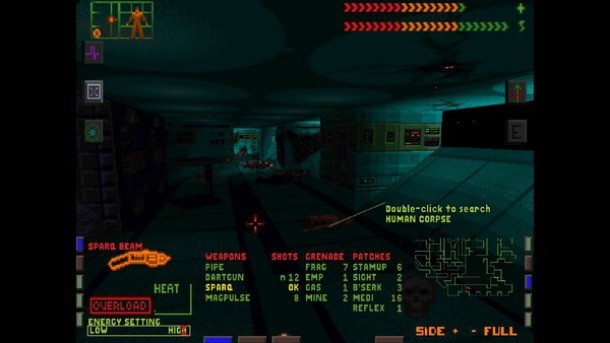
While it was once a hassle to track down a copy of System Shock, Night Dive’s recently released enhanced edition solved that problem. Unfortunately, for all the game’s innovations, it’s still a pain to play thanks to an archaic control scheme that makes the experience feel more like a history lesson than an engaging time.
Luckily, there’s System Shock 2.

How System Shock 2 Changed Everything
It would take nearly five years for the sequel to System Shock to arrive. By 1999, Looking Glass Technologies had become Looking Glass Studios and released Thief: The Dark Project. System Shock 2 is a different and far more vicious animal than its predecessor. The first game had elements of horror but was basically a cerebral action-adventure game. The sequel is outright horror, with the player constantly placed in a position of paranoia and powerlessness, fighting gruesome monsters and even encountering (digital) ghosts.
SHODAN returns in the second game but in a larger, more diabolical role, initially pretending to be a human and using the player as a tool to fight her enemies before revealing her true identity in one of gaming’s best plot twists. Talking about the twist to Gamespot in 2007, game director Ken Levine explained: “If I had a single goal in making Shock 2, it was to corrupt the relationship of the player with the game. Games tend to be very trustworthy-good guys are good, bad guys are bad. What you see and perceive is real. Sometimes characters are betrayed, but the player never is. I wanted to violate that trust and make the player feel that they, and not [only] the character, were led on and deceived.”
The game has aged better than its predecessor thanks to a new engine and a user interface that isn’t so sluggish, making System Shock 2 play more like a first-person shooter than a menu juggler, as well as its innovative skill trees. The skill system forced you to make choices about what kind of character you were going to be, like a bruiser who could mow down enemies with advanced weapons or a brainy type who’s better off sticking to the shadows and hacking turrets to use them against enemies. While this sort of RPG convention wasn’t new in itself, System Shock 2’s progression system was exciting because it worked well with the tense atmosphere, letting players determine how they would weather this nightmare scenario.

Where the first game set up situations that had you thinking tactically to try and figure out how to overcome obstacles, System Shock 2 raises the tension, forcing you to do the same thing but this time you’re often cowering in a storage closet, listening closely for the monster standing outside the door to finally wander away. The ship you’re stranded on, The Von Braun, is as effective a setting in a horror game as there has ever been. You’ll find bodies hanging from ceiling pipes, rooms torn asunder, robotics gone haywire and the corpses of people who have shot themselves rather than be turned into SHODAN’s slaves while you scurry through hallways, hoping to remain undetected for as long as possible. System Shock 2 was the first game to take the premise of being trapped on a spacecraft with deadly lifeforms and make it terrifying while also developing the effective, excerpted storytelling method from the original System Shock.
The collectible audio logs go beyond being a trail of bread crumbs to lead the player around. They also help reinforce the terror of The Von Braun, revealing the ship to be a place rife with paranoia and betrayal, crew members at each other’s throats before the mutants started taking over the ship. These recordings give the place a sense of history so you’re not just wandering a random starship. It’s a place where people have lived, where they’ve loved and hated one another, and now you’re standing in their mass grave. There’s more than horror there: there’s somberness and tragedy as well.
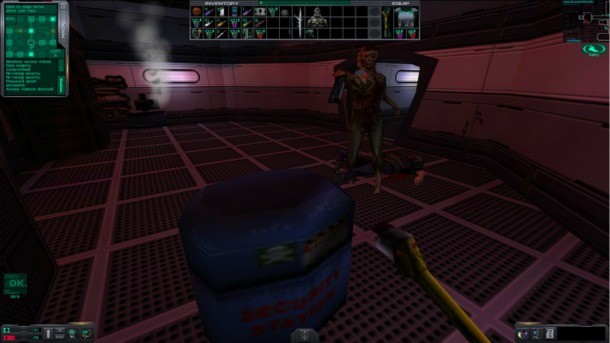
As incredible as the second game was, it wasn’t a commercial hit for Looking Glass and less than a year after release, the developer shut down. Irrational Games, the company that co-developed the game, carried on the series’ trademark focus on environmental storytelling and emergent gameplay with BioShock, a spiritual successor that takes place in an underwater utopia inspired by Ayn Rand’s Objectivist philosophy. The game replicated the major plot points from System Shock 2, casting you as a stranger in a strange land who’s eventually betrayed by a companion, while having a stronger focus on gunplay than its cyberpunk counterpart. BioShock, a game that had the benefit of launching on consoles after being hyped for several years, is more popular than PC-exclusive System Shock ever was. However, both a new System Shock game and the remake of the original game could bring the series back into the public eye in a big way, revitalizing two cult classics and turning them into a powerhouse franchise by drawing in both fans of the original games and people who adore BioShock.
The announcement for System Shock 3 raises a number of questions, even more than your typical teaser reveal for a game. How can Otherside Entertainment afford to develop both System Shock 3 and Underworld Ascendant without being stretched too thin? In what capacity are they working with Night Dive Studios, who owns the rights to the IP, to help make this game happen? Otherside Entertainment was founded by Paul Nerauth, one of the founders of Looking Glass, so who else from the development teams for either System Shock game is coming back? And what about the game itself? System Shock 2 had a rare, quality cliffhanger. Will 3 pick up from there or be its own story?
The teaser site, which went live today, answers none of these questions and instead offers up a snippet of audio from SHODAN saying hello in her classic, murdery way as well as a survey asking users their age, console preference and gauging their interest in virtual reality gaming. Though it exists in the public eye only as an announcement at this point, it’s not hard to understand why many gamers are ready to see what creeping horror awaits around the bend. The first two System Shock games were transformative classics, changing the adventure genre forever with their innovations. And while it’s impossible to know what the third game will be like, or if it will have anywhere near the same impact as its predecessors, this is still shocking and exciting news for a series that most have considered dead for more than 15 years.
You can read System Shock 2 director Ken Levine’s thoughts on the third game’s announcement here.
分類: features, IT 資訊科技(信息技术), 熱門新聞 標籤: android, App, apple, Apple Watch, ASUS, Aws, digital game, Facebook, features, Galaxy, game, game footage, Games, Google, Huawei, iMac, IPad, iPhone, macbook, Mobile, news, online game, PC Game, Phone, PlayStation, Samsung, smart phone, Technology, Video, video game, youtube game footage, 多人电子游戏, 手机游戏, 电子游戏, 电子游戏机, 电竞计算机, 超級任天堂, 遊戲, 電競 在〈Everything You Need To Know About System Shock〉中留言功能已關閉
This is How System Shock Came Back From The Dead

Otherside Entertainment just revealed a new look at System Shock 3 at this year’s GDC. However, it’s actually another company called Nightdive that’s responsible for bringing the franchise back from the grave. Here’s how they did it. This feature originally appeared in issue 281 of Game Informer.
In 1994, a Cambridge-based developer named Looking Glass Technologies released System Shock, perhaps one of the most influential games of its time. The game combined first-person shooter with role-playing systems, encouraging the player to proceed with caution through a space station’s dangerous corridors and think carefully about their every move. In 1999, Looking Glass released a sequel shortly before closing its doors; Irrational Games, which worked on System Shock 2, carried on the design of the series with the critically acclaimed BioShock. Now nearly 13 years later, a Kickstarter for a remake of the original System Shock has raked in over a million dollars, and a third game in the series is being developed by a team made up largely of developers who worked on the original.
The roads behind the series’ sudden resurgence lead back to Nightdive Studios, a small and dedicated team that has, up until this point, dealt solely with acquiring older games, like Turok and The 7th Guest, and making them playable on modern PCs.
Four years ago, Stephen Kick and Alix Banegas were on a trip of self-discovery in Mexico and close to broke. Now not only do they have the keys to the System Shock franchise, but they’re remaking the original from the ground up. How they got there is quite the story.

In Search Of Something New
Both Kick and Banegas had been working as character artists for Sony Online Entertainment for a few years before deciding to head off in a new direction. “Alix quit and started her own plushie business,” says CEO Stephen Kick. “She did like video game plushies and ended up doing stuff for DOTA 2. During that time I was kind of like a higher up for the character design on Planetside 2 and we just had so many ambitions and wanted to make our own games, and just didn’t want to be in a corporate environment anymore because it just sucks it out of you after a while.”
The pair quit their jobs and packed up the car before heading down to Mexico with no concrete plan except to just wander for a bit. “We crossed the border into Tijuana and just kept on going, all the way across Mexico,” recalls CFO Alix Banegas. The two were in Guatemala when Kick tried to play System Shock 2 on a notebook laptop he had brought along to revisit some of his favorite games, but quickly encountered obstacles.
“I was carrying the CDs and installing the game, and I’m getting all these errors right off the bat,” he says. “So immediately I go on the internet and start looking for fanmade patches, just anything I can get to get the game running again. I go on GOG.com, it’s gotta be there, and it’s not. There’s no legal way to purchase this game. There’s no way to play it on anything newer than Windows XP. And the whole experience just opened up this sort of mystery trail: This is one of the best games ever made. How is there no way to play it?”
That question eventually led Kick and Bane gas to form their own business dedicated to letting customers play games thought to be lost to the ravages of time.

Taking The Plunge
Kick spent some time researching why System Shock 2 was unplayable on modern systems. He discovered both a growing demand for a playable version of the game as well as the identity of the company that owned the rights to the series. Star Insurance Company had obtained Looking Glass Studios’ assets after the company closed its doors in 2000. Curious about the status of the series’ rights and whether Star had any plans for them, Kick sent them a cold email. Surprisingly, he received a reply the next day. “They wrote me back asking what I wanted to do, if I wanted to make a third game,” he says. “I’m in the middle of the jungle at the time [with] no money, and Star Insurance had me on a phone call with their head council.”
According to Kick, Star was wary about doing anything with the rights due to how expensive it would be to create a sequel. Kick went another route, pitching them on re-releasing System Shock 2 in a playable state on Steam and GoodOldGames.com (GOG). He showed them the sizable wishlist for the game on GOG as evidence that there was a demand for such a re-release. He eventually persuaded Star with the potential profit and borrowed money from friends and family to pay for the licensing fee.
Around the same time, Kick discovered an anonymous modder had created a patch that made System Shock 2 playable on modern systems. “I had already been in contact with friends and programmers to create a team to make this work, and this person in France had basically released this file so that all you had to do was stick it in the system directory of System Shock 2,” Kick says.
Controversy struck when Kick and Bane gas launched their version on Valentine’s Day, 2013. “It was kind of strange when we released because the System Shock 2 community was like ‘How dare this company come out of nowhere and take the work from modders and claim ownership of this stuff?’ It was a big mess,’” Kick says. “I didn’t intend for any of that to happen, and we did not claim that we did the work. We tried to reach out to this person, but they wished to remain anonymous.”
According to Banegas, the first sales report revealed good news in spite of the controversy. “At the end of the month, it was abundantly clear from our first sales report that this was a viable business, a sort of niche that we could hit the ground running with and that’s what we did,” she says. “So here we are.”
After System Shock 2’s success, the venture quickly became a business, one that Kick and Banegas named after one of their shared passions. “During our trip we did a lot of diving, particularly night dives, going down to the bottom of the ocean where it’s completely dark and only having this cone of light from your torch and there’s just so much to see down there, so much treasure and you just never know what you’re going to find,” Kick explains. “So we kind of made that analogy. We go out and look for places where people haven’t been in a long time to bring back these forgotten classics to polish them and clean them up and make them playable again, available for everybody. So it all kind of fell into place. We reached out to other people through various sources who might have connections and we just started accumulating these licenses.”

Moving Forward By Going Backward
The newly formed Nightdive started focusing on acquiring adventure staples and cult classics from the ‘90s. Four years later, the studio has touched up and released nearly 100 titles including Turok, The 7th Guest, and Sword of the Samurai. Kick says they ended up using the studio’s profits to purchase the rights to Sys tem Shock from Star Insurance in August 2015, fully intending to remake the original game.
“We had such a wide network of artists, programmers, developers that we could light the Flame of Gondor and everyone would come,” Kick says. “It was just a matter of these pieces falling into place so we could get started.” It turns out he wasn’t wrong. The Kickstarter campaign boasts recognizable talent from across the industry, including Chris Avellone, a designer who worked on Baldur’s Gate and Fallout: New Vegas, as well as the concept artist for the original System Shock, Robb Waters. The majority of the development team is remote, with members working from San Francisco and New Zealand, while Banegas and Kick continue to run Nightdive out of their home in East Vancouver.
“This is basically the entirety of Nightdive Studios,” Kick says, introducing a small office, filled to the brim with artwork from H. R. Giger, comic books, and model lightsabers. He opens a closet to reveal shelves upon shelves of boxed copies of PC games from the ’90s; several of them have signatures from developers like Tim Schafer scribbled across them in sharpie. “I like to get a boxed copy of every game we try to acquire, even the ones that don’t work out,” he says, flashing a copy of Bad Day on the Midway, a game that Nightdive was close to closing the deal on before the original programmer revealed that he had accidently thrown away the source code. “Now this game just might never come back, might never be playable again,” Kick says, sliding the box back onto the shelf. “Unless you just happen to have a Windows 95-era PC. That was really…that was heartbreaking, you know? We were so close.”
Bad Day on the Midway isn’t the only game lost to time, as Nightdive has also been unable to acquire the rights to other classics, though Kick refuses to say that these are lost causes. “Part of my whole mission is to just not be indiscriminate with which games we bring back, to give everything a fair chance,” he says. “But if it’s too cost prohibitive, we kind of have to put it on the back burner for -a -while.” Though Kick and Banegas plan to keep on touching up and re-releasing games, right now the company’s priorities lie with making the System Shock remake a reality. A great deal of anticipation and expectation both fuels the project and creates unique obstacles, but the duo are excited and ready for the challenge of bringing series back to the spotlight – in more ways than one.
In December 2015, Otherside Entertainment (formed by Paul Neurath, the creative director of Looking Glass Studios) revealed it was developing System Shock 3. This sent ripples of confusion throughout the community, since it was well known that Nightdive had purchased the rights to the series. The answer’s pretty simple: Nightdive gave Otherside Entertainment permission to make the game. “Our relationship with Otherside is amicable,” Kick says. “We licensed them the rights to do the third game. That was just a conscious choice, like it had to be done, right? It’s the majority of the original team. Who better than them to make the next one? “I think ultimately when I look back on it, there was a seed that had been planted in my head from the beginning that we would get this license and eventually be responsible for doing System Shock 3. We’re going to work with the original creators, all this sort of stuff that was pipe dream at the time, and now that it’s all happening and all these pieces are in place, more than anything I’m thrilled to see that Shock is coming back. It deserves it.”
Nightdive Studios has carved out a strange, unique path for itself, one that could have only happened with the opportunities offered by the era of digital distribution. While the developer has proven itself as an outfit capable of preserving games thought to be lost, whether or not it can create a quality game from the ground up is still a question yet to be answered. However, the studio’s passion for revitalizing the past for a new generation to enjoy is unmistakable and a necessary foundation for pulling off the Herculean task of not just restoring a masterpiece but making it as shockingly good as it was all those years ago.
For more on System Shock, be sure to read my primer on the series here.
分類: features, IT 資訊科技(信息技术), 熱門新聞 標籤: android, App, apple, Apple Watch, ASUS, Aws, digital game, Facebook, features, Galaxy, game, game footage, Games, Google, Huawei, iMac, IPad, iPhone, macbook, Mobile, news, online game, PC Game, Phone, PlayStation, Samsung, smart phone, Technology, Video, video game, youtube game footage, 多人电子游戏, 手机游戏, 电子游戏, 电子游戏机, 电竞计算机, 超級任天堂, 遊戲, 電競 在〈This is How System Shock Came Back From The Dead〉中留言功能已關閉
The Simpsons To Air Esports Episode This Weekend

Looks like forever-boy Bart Simpson is about to dive into the world of streaming and esports. An executive producer for The Simpsons, Al Jean, took to Twitter to showcase a preview for an upcoming esports-focused episode titled “E My Sports” that will incorporate League of Legends:
.@TheSimpsons New episode Sunday! pic.twitter.com/i2xhQeNQvR
— Al Jean (@AlJean) March 14, 2019
The Verge has confirmed initial reports that Riot Games consulted on the show for the sake of accuracy:
Whalen Rozelle, Riot Games’ co-head of e-sports, tells The Verge that The Simpsons reached out last year to learn more about League e-sports, as an executive producer for the show regularly drives by League’s e-sports arena on the way to work.
“E My Sports” will air on Sunday, March 17. For more on the world of The Simpsons and video games, head here.
[Source: (1) Twitter, (2) The Verge]
分類: IT 資訊科技(信息技术), 游戲game, 熱門新聞 標籤: android, App, apple, Apple Watch, ASUS, Aws, digital game, Facebook, Galaxy, game, game footage, Games, Google, Huawei, iMac, IPad, iPhone, macbook, Mobile, mobile game, news, Nintendo Switch, online game, PC Game, Phone, PlayStation, PlayStation 2, PlayStation 3, playstation 4, PSP, PSP3, PSP4, Samsung, smart phone, Technology, Video, video game, Wii, Wii U, Xbox, Xbox 360, Xbox 360 Game, YouTube, youtube game footage, Zeebo, 任天堂, 多人电子游戏, 手机游戏, 电子游戏, 电子游戏机, 电竞计算机, 超級任天堂, 遊戲, 電競 在〈The Simpsons To Air Esports Episode This Weekend〉中留言功能已關閉
25 Thoughts About Revisiting Red Dead Redemption 2

In the five months since its release, I’ve found myself returning to Red Dead Redemption 2 constantly. Even after completing the mammoth story, I loaded up an earlier save just to play through the whole game again at a more gradual pace — exploring, hunting, and really living out Arthur Morgan’s experience as fully as I can.
During that time I’ve been keeping a notepad filled with a lot of little thoughts about the game. Initially I thought I was going to maybe take one or two of them and expand them into a big piece, but in the end I decided that just polishing these notes, which cover everything from how Red Dead Redemption 2 tackles to its breathtaking immersive touches, and putting them online would be keeping in spirit with Red Dead’s sprawling ethos as well as protagonist Arthur’s habit of journaling everything.
So here you go!
1. Loading back into my save, I find Arthur Morgan standing outside of Valentine, leaning against a post. He’s smoking a cigarette. He looks just like I left him, abandoned halfway through a second playthrough when work and other games popped over the horizon. It is good to see an old friend again even if he’s in need of a shave.
2. I’m still in awe of the joy of walking around a store in Red Dead. It’s such a simple thing, being able to pick up items you’re going to purchase from shelves. Why is it so magical in a video game? Most of us do it several times a week. Is it just the strangeness of not having the impersonal, yet convenient, menu? Like so much of Red Dead, this small thing is hard to explain but therein lines so much of the game’s charms.
Critics dismiss these features as realism porn, but I think that’s giving these moments the short shrift. Instead, they’re celebrations of the mundane, the discovery of magic in the ordinary. The same way close-ups in cinema can load a normal conversation with emotional baggage or a wide shot can convey the splendor of nature, making interactions out of such small moments can draw attention to how special they are even when we do them day-in, day-out.
3. I come upon a man on the beach with a fire. He yells at me to get lost. I stand my ground. Why the hell does he think this is his beach and not every man’s? After a few seconds he pulls a gun and shoots me in the shoulder. I blow his arm in two with a shotgun blast and send his body sprawling in the water. It floats eerily.
A pop-up notification informs me that I’ve taken a morality hit for defending myself, which seems unfair initially, but maybe I should have run away. What was to be gained from standing around except some small smidge of pride for refusing to back down. Is that really worth baiting an escalation in violence?
4. A column of smoke is still the most exciting thing to see in this game. It’s such a clear, well-designed signal that something worth checking out is nearby. It’s just the right amount of vague intrigue too. What lurks beneath the smoke? A house to rob? A gang camp to invade and pillage? A stage coach robbery to prevent. Some men sitting around the campfire eager for company? A new questline?
There’s so much that could be there. It’s amazing how I still get excited seeing one of those even with two hundred hours put into exploring this world. Where other open-world games literally map everything out for the player (here’s where you go to do the driving side-activity, here’s an area with a lot of loot, here’s where you upgrade your weapons), discovery is left in the hands of the player here and always remains an exciting proposition. Well, for me and my Arthur anyway.
5. I feel like a real jerk whenever I stick my horse with a stimulant syringe.
6. Running head-long into a tree and both my horse and Arthur ragdolling never gets old.
7. Shooting an animal while hunting and missing a vital spot is the worst. Not only because I lose out on valuable goods, but also because when the prey escapes I know that soon, as it limps away, that it will probably die somewhere in a clearing nearby in great pain, crying out, and that it’s suffering is exclusively my fault. Of all of Red Dead 2’s realism mechanics, the suffering of animals and the in-depth skinning animations are the ones that l still come away feeling conflicted about.
I’ve never handled animal deaths in real life or media well, so seeing deer cry out in pain or a bear pathetically sniff the grass as it writhes around wounded is soul-crushing — to the point I don’t pursue any of the satchel or camp upgrades associated with hunting. Instead, I only hunt to support the camp and Arthur with food. In that, I think that Red Dead 2’s hunting system is a success because it’s interesting. Whereas Far Cry and other similar titles merely treat hunting as a path to loot, RDR 2 does something a little more horrifying with it. Yes, it’s still essentially a path to power upgrades if you want, but also one with a disturbing emotional cost. The act of closing your heart to such suffering also fits well with the game’s themes about survival and desperation.
8. One of the things that work really well about modern Rockstar open-world games is how they make the player inhabit their protagonist. When I play GTA IV or either Red Dead Redemption, I’m not just playing my avatar. I’m playing Niko, John, or Arthur. And that’s kind of a powerful thing if you think about it. Most RPGS or games with RPG systems are never really able to divorce their characters from the concept of the avatar. Far Cry 4’s Ajay Ghale is never more than the hand that holds the gun, with a few biographical details that I keep in mind during the campaign.
Even in Mass Effect, commander Shepard isn’t so much a character but a moving, talking reflection of all our choices – arguably gaming’s most famous tabula rasa. However, when I play Arthur Morgan and I take him shopping for clothes, I’m not dressing him up because I want my character to look nice. Instead, it’s because I want good things for Arthur. I want to reward him for roughing it out on the frontier or comfort him after a lousy outing with an ex-girlfriend. I react to him as a character instead of an avatar. How does he deal with grief? Does he go and drink for hours in a bar? Does he get in fights in the streets of Saint Denis? Kidnap people and throw them off the cliffs of mountains in a murderous rage?
I approach Arthur in the same way that I do when I’m writing character for stories or games that I make, creating backstories and moments in which he responds to some event (traumatic or joyful) and I think the balance between established overarching narrative and smaller malleable player-driven stories is part of what makes Red Dead Redemption 2 so special.
9. I don’t like how Mary Linton treats Arthur, but I like their relationship. She gives him crap in a way that nobody else can and he takes it. It drives home that the relationship is an old one and a painful one cast in the gloom of love lost. Sure, she might be giving him a raw deal by bribing him into being an errand boy for her affection but, at the same time, Arthur’s default is basically errand boy. And his personality definitely seems like the kind that would respond positively to her mix of affection and light disparagement.
10. Addendum to #6: Running head-long into trees and rocks doesn’t get old but having to pick up the animal carcass formerly stowed on the back of the horse every time I do sure does.

11. When you take a taxi in Grand Theft Auto, you have the option of enjoying the ride. Just nestling back and watching the people walk by on the streets as music blares and your cabbie scratches his chin. Curiously enough, you don’t get the choice to just sit in the back of a carriage when you use ones. It’s just an immediate fast travel sequence into a loading screen that shows the carriage riding across various landscapes before you get to your intended destination.
I 100 percent think that the vast majority of players don’t mind not having the option (and even saying that I’m missing it in any deep way is a stretch), but a part of me wishes that it was there just to have another option for letting Arthur (and the player) relax and take in the world.
12. I wonder why Arthur doesn’t sleep with anyone? Women will proposition him but the player’s options are always “reject” and “decline.” Outside of an optional, weirdly suggestive bath time sequence, Arthur is pretty sexless. In the original Red Dead Redemption, John never slept with anyone because he was married. Arthur’s hesitation is left up to debate, though. Is it about being in love with Mary? Is the idea of accidentally having another child terrifying to him after his son’s tragic death? His journal offers no answer and I like the ambiguity.
Again, Rockstar is very good about walking a tightrope between telling us who Arthur is and letting us decide who he is, so this particular choice interests me, especially in light of the developer’s history of making sex little more than a gag or a literal transaction in its games. Instead, Red Dead Redemption 2 treats sex as complicated and moored in emotion and consequence. Karen and Sean have a fling to escape the loneliness of the frontier life, Molly tries (and fails) to use her sex appeal to make Dutch see her as the only woman in his life. For John, sex (at least with anyone but his wife) becomes a shameful thing, a marker of the past he’s trying to escape. For Arthur, well, who knows what it means but the consequences of it have clearly left its mark on him.
13. The fog effects in this game is amazing. It’s somewhat easy to dismiss visuals in this day and age where every game is more or less hitting the same range of photorealistic. However, seeing Arthur ride through Saint Denis in the morning fog, his body literally cutting through the blanket of it as his horse trots along is such an eerie effect.
14. The transitions in Red Dead Redemption 2, like other recent Rockstar games, are marvelous. I don’t mean in cutscenes. Instead, I mean storytelling that occurs when the game’s systems meets the player’s actions. For instance, a few minutes ago a man drunkenly insulted me. I pushed him. He pushed back. I ended up beating his face in only to have a cop pursue me through the streets as I whistle for my horse, calling his buddies on me. I run down streets, ripping through alleyways in a desperate attempt to escape. One cop tackles me and I push him off, running into a road to finally meet my horse.
As I pull myself onto the saddle and take off, an errant shot from one of the nearby policemen strikes a civilian that was ambling nearby, killing them instantly as I make my escape out of town and into the swamps. This entire story (the fist fight, the escape, the tragic death of a bystander) is a product of me poking the world in a certain way, and it’s impressive how natural it all feels, like it’s actually a scripted cinematic sequence and not just a bunch of escalating incidents.
15. A little bit more re: the last note. A lot of open-world games are reactive. That’s nothing new. However, I think Red Dead Redemption 2 is reactive in a smart way. A good point of comparison is Far Cry, yeah? So much of the ethos of that series is wrapped up in the idea that something unexpected and exciting can happen at any moment: a rhino charging out of the forests to slam into the truck of attackers you’re squaring off against is a fantastic moment.
However, in actuality, Far Cry makes its world react to the point that it doesn’t feel like a convincing setting or a world that’s easy to immerse yourself in. Instead, in the pursuit of becoming an emergent story-generator, the game’s reactive elements become annoying — refusing to give the player a moment’s peace. I can’t count how many times I found myself attacked in Far Cry 5 by a cougar that had just seemingly come from nowhere, ruining my attempts to fish or hunt.
Now look at how Red Dead Redemption 2 reacts to you. When you walk into the Valentine bar and unholster a pistol, everyone stops what they’re doing. The folks at the poker table all look at you. The bartender chastises you. The drunk at the table and the barber all watch you uneasily, waiting for the guns to pop. It’s that scene you’ve seen over and over in a Western — with the stranger setting everyone on edge with his promise of violence. These reactions to you, the player, work because they fall in line with your expectations of the Western genre.

16. There’s something really nice about going down to the shoreline and spending a minute or two cleaning all your weapons. Same for brushing your horse before you ride out on an adventure. I’m such a sucker for games that celebrate little preparation rituals before the big action happens.
17. I try to keep Arthur firmly planted in chaotic neutral territory, using violence only when people mess with me. However, I’m 99 percent sure the Blackjack dealer in Van Horn is cheating. Sure, it’s only a matter of five dollars, but I can’t help but shoot him in the knee for his treachery. This, of course, sends all of Van Horn after me. Whoops.
18. With nearly two hundred hours in this game, I’m still finding new events (maybe they’re adding them in?). I come across a tent with someone coughing from within. When I check it out, two men emerge from the tent with their guns trained on me. They try to rob me. I put holes in both their faces with my quickdraw and go on my merry way.
19. There’s this bad idea perpetuated by a lot of writers that interesting situations create interesting people. It’s a dumb philosophy that leads to hackneyed tropes and one that shouldn’t be embraced by anyone looking to tell character-driven stories. Instead, I think the truth is the opposite: people are interesting to begin with and interesting situations draw out those aspects. I think Red Dead Redemption 2’s gang is testament to that. They’re fascinating people even when they’re not robbing banks or plotting to take down enemy gangs.
It speaks to the great writing behind those characters that I spend so much time reading their letters or talking to them instead of running out and about in the world. I think my favorite interaction in the entire game is one where Arthur can sit down next to Tilly or Mary-Beth and open up about how feels about killing people. It’s a quiet conversation, one you can ignore entirely when you’re in a rush, but these moments are so quietly compelling and do so much work to make these characters feel like actual people — something video games are still extraordinarily awful about.
20. Games are often bad at understanding that showing is often just as important as doing. It goes hand-in-hand with games being an interactive medium. Think about how many games, at least those in the AAA region, actually ever slow down in terms of telling a story or letting you experience a world on your own terms. Sure there are your Uncharteds and Wolfensteins, but they’re easily dwarfed by the number of live-service titles or linear balls-to-the-wall games that are all about the frenzy of the moment.
Enter a place, do the action that the game hangs on (shoot thing, beat thing, solve thing), move on to next place to do the next thing. Red Dead’s Sleep No More-like camp sequences are a testament to the power of just taking the player aside and saying “Hey, experience this moment, ok? We’re not going to shoot anything. We’re not going to kill anybody, race anybody, we’re just going to watch this thing unfold.” The ability to move around the camp while everyone is doing their own thing during these parties is enthralling, whether you’re spying on Karen and Sean have a fling or watching people goad Javier into singing a ballad.
21. Man. That “Ring Dang Doo” song sure is dirty (and catchy).
22. A thing that happens when you go sober in your late 20s: you start watching people drink. Initially, it’s out of jealousy and resentment but, if you make it long enough, that eventually transforms into curiosity. I’ve started watching how games handle drinking. Usually it’s tied to uproarious celebration or showcasing characters being goofy. No one ever corrodes their relationships or says awful things they can’t take back. In that regard, Red Dead Redemption 2 is not exceptional. Arthur, Karen, and everyone can drink and drink and drink without everlasting consequences besides a headache and a little vomiting.
What a nice little fantasy.
23. I’m not sold on all the stranger missions in the game. Some of them are funny and amusing distractions, like the one where you have to round up the buffoon circus leader’s animals, but the vast majority just feel like a waste of time in comparison to hunting or even just people-watching in a saloon in Saint Denis. I don’t necessarily buy Arthur just doing errands for these particular weirdos either.
24. I love Sadie’s arc. It’s a standard revenge-driven setup, but the way the story plays out, with Sadie finding her place among the outlaws, is great. I also dig that there’s no option for romance with Arthur, that the two never see each other that way. It’s very much a Don Draper and Peggy Olson Mad Men relationship founded in mutual platonic affection and mentorship. I just wish you had more missions to capitalize on that relationship. Feels like there’s only a handful.
25. So, if you don’t do a certain series of sidequests, you miss out on Arthur forming a friendship with a nun. A nun that gives him a great bit of advice in a scene that’s all too easy to miss in a pivotal, end-game spoilery moment (watch it here). The full exchange between Arthur and the nun is so good, such an eloquently and economical discussion about the difficulty of being decent and finding meaning in life:
Arthur: What am I going to do now?
The Sister: Be grateful for the first time you see your life clearly. Perhaps you could somebody? Helping someone makes you really happy.
Arthur: [sighs] But I still don’t believe in nothing.
The Sister: Often neither do I. But then I meet someone like you and everything makes sense!
Arthur: [laughs] You’re too smart for me, Sister. I guess I’m…I’m afraid.
Sister: You have nothing to be afraid of, Mister Morgan. Take a gamble that love exists and do a loving act.
I think the heart of the game is right here in this exchange. So much of Red Dead Redemption is mired in the complexity of doing the right thing, even when it won’t get you a miracle solution to your problem. Both John and Arthur, at their most heroic, act out of genuine, selfless love for the people around them. No fortune, no desire to accumulate social standing. Just sacrifices big and small for loved ones. That in itself isn’t a particularly innovative character development, of course, but these scenes do a great job of making Arthur’s journey toward decency a heartbreaking and gripping spectacle.
For more on Red Dead Redemption II, check out this feature on 101 things you can do in the game or this piece on why Arthur Morgan is such a compelling character.
分類: features, IT 資訊科技(信息技术), 熱門新聞 標籤: android, App, apple, Apple Watch, ASUS, Aws, digital game, Facebook, features, Galaxy, game, game footage, Games, Google, Huawei, iMac, IPad, iPhone, macbook, Mobile, news, online game, PC Game, Phone, PlayStation, Samsung, smart phone, Technology, Video, video game, youtube game footage, 多人电子游戏, 手机游戏, 电子游戏, 电子游戏机, 电竞计算机, 超級任天堂, 遊戲, 電競 在〈25 Thoughts About Revisiting Red Dead Redemption 2〉中留言功能已關閉
Five Reasons To Be Excited For Wrath: Aeon of Ruin

Today 3D Realms announced that it’s publishing another retro-looking shooter called Wrath: Aeon of Ruin. Developed by newcomer Killpixel, Wrath’s main surface-level hook is that it’s created in the same engine that made Quake. However, there’s a lot here that makes the game more than just another throwback shooter.
The publisher stopped by Game Informer recently to let us play the game and we came away pretty impressed with our time in this dark fantasy shooter. Here are five reasons Wrath could be super cool.
The Story Is Interesting
Taking inspiration from Bloodborne and Shadow Of The Colossus, Wrath stars a wanderer called The Outlander trapped in a mystical dimension known as The Ageless Sea. Chosen by a cloaked figure called The Shepherd of Wayward Souls, the Outlander must track down and kill several Guardians, slaying literal armies of foes that try to stop the Outlander as they search. It’s a fun, dark premise and 3D Realms promises some narrative surprises along the way.
The Visual Design Is Fantastic
The Quake-inspired aesthetic is cool, but everything else about the game’s visuals sings too. From enemies to weapons and even level layout, the game reminds us of a heavy metal album cover from the ’80s.
The Combat Is Meaty
Players get their hands on several fantastical weapons in Wrath, including a double-barrel shotgun capable of showering hallways in ricocheting pellets as well as a launcher capable of hurling massive gobs of acidic slime on foes.
You also have access to high-risk items that can get you out of the many tough occasions you’ll come across. One item lets you take your health all the way down to almost nothing in exchange for ten seconds of invulnerability. Not a bad proposition if you’re fighting a losing battle already and need a quick turnaround.

Secrets Are Everywhere
It wouldn’t be a retro shooter without secrets. Get ready to solve puzzles, knock down walls, and scrounge every floor of every level of secret stashes of goodies, including armor, ammo, and weapons that can help you survive a toss boss battle.
Modding Tools Will Be Available On Launch
Killpixel and 3D Realms are giving players all the tools they need to make their own levels for Wrath, so expect to see even more demented, terrifying hellscapes to battle through after launch.
The Occupation Review – Stumbling In The Dark

Publisher: Sold Out, Humble Bundle
Developer: White Paper Games
Release:
Rating: Teen
Reviewed on: PlayStation 4
Also on:
Xbox One, PC
Xbox One, PC
The year is 1987 and the United Kingdom is in the midst of political unrest. Mobs take to the streets to protest overbearing economic conditions, as well as an upcoming piece of legislation called The Union Act, which is focused on keeping immigrants out of the country. A bomb has just gone off, killing a crowd of civilians and leaving an obvious suspect ready to take the blame for it all. But things are a little too clear cut. That’s where you come in in this tale set in an alternate timeline from ours. As a journalist with a national paper, your job is to investigate a government office to uncover the truth of who’s behind this bombing and why. But the clock is ticking. The Occupation’s setup has the potential for greatness, promising a political tale where your choices shape the fate of an entire country, but only a few shreds of that promise survive due to uneven execution.
The Occupation’s main hook is how it plays out in real time. You arrive at the governmental office in the early afternoon, and you have four hours to solve the mystery by investigating the building and avoiding security patrols. This first-person stealth adventure is split up into several chapters, with each one ending with a segment where you interview a subject with the evidence you’ve found. You have an hour for most chapters to get what you need, with the most important clues being turned into vital questions you can ask during these interviews that contradict whatever account or information your interviewee is presenting. Missing out on vital questions can radically change the ending of the game.
During the hour of prep, you’re combing through various sections of the building, avoiding guard patrols and searching computers, waste bins, safes, and file cabinets for anything that will ultimately lead to an interview question. Multiple paths exist to the various bits of intel you need to collect. For example, to get into a restricted area to obtain a floppy disk, you can steal a keycard from someone’s mail, or simply use the building’s ventilation shaft to get there. Unfortunately, the ventilation shaft navigation towers over all the more impressive solutions due to the time limit, which discourages you from exploring options when you have such an easy path to progression in front of you.
Every significant clue you discover is added to your dossier, with incremental bits of evidence helping you get the whole picture of the conspiracy at hand. The actual investigation aspect is compelling; I loved combing through my notes, listening to recorded tapes of suspects, and poking holes in alibies as the clock ticked down. However, all of that takes a backseat to stealth-centric gameplay. Though I appreciate the open-ended navigation, the other aspects of sneaking around are a bummer.
Click here to watch embedded media
You don’t have much to help you evade the guards except hiding and hoping for the best. You have no weapons, and no useful tools in your inventory to distract your foes. More often than not, the only real choice is to scamper down into a ventilation shaft or hide under something. If caught, you lose around 15 minutes of time as a punishment. While I loved digging through files and ransacking offices for the next thread in this mystery, I detested every time I had to hide under a table for several precious minutes while someone looked around with their flashlight. It’s just so boring.
A host of technical issues makes the experience even more frustrating. Guards were often capable of inexplicably seeing me through walls or window blinds I had closed moments before. One guard glitched across an entire floor in a matter of seconds, making avoiding him impossible. Another one became stuck in a doorway, forever investigating a single office and essentially giving me free reign of the building for the rest of the chapter.
The dull, broken nature of sneaking about is also disappointing because it weighs down the few genuinely compelling mechanics, like using pneumatic tubes throughout the building to get floppy disks by data-wiping gates. However, the sheer monotony of diving beneath a desk or peeking from corners for minutes at a time makes the novelty of these ideas dry up fast.
Something special lies at the heart of The Occupation, but the gameplay and technical issues get in the way of its most interesting qualities. The storytelling happening beneath all the clunky stealth is great. I grew to care for the characters I was reading about in dossiers or interrogating in intense interviews; the conflicted, guilt-ridden government employee Scarlet is a standout among a cast of morally complicated individuals. The bleak resolution that I reached, which took me to task for my failure to uncover all the clues, was a powerful conclusion to a story. I just wish it wasn’t such a chore to get to that point. The Occupation’s technical issues and consistent dullness will likely keep me from playing through again to see just how many consequences exist for your failures and successes, and that’s a shame.
Click image thumbnails to view larger version


Score: 6.75
Summary: A fantastic story is buried too deep within The Occupation’s dull stealth gameplay and technical issues.
Concept: Uncover a political conspiracy with clandestine reporting and determine the fate of an entire nation
Graphics: The painterly outlines of The Occupation’s otherwise realistic world and people make it stand out visually
Sound: A fantastic soundtrack comprised of convincing ‘80s punk tracks created just for the game makes sub-par voice acting easier to deal with
Playability: The Occupation’s stealth is bad and its controls are clunky, hampering what could be a great interactive political thriller
Entertainment: If you’re willing to push past a large number of technical issues and poor stealth gameplay, there’s a fantastic story buried deep in The Occupation’s heart
Replay: Moderate
分類: IT 資訊科技(信息技术), Reviews, 熱門新聞 標籤: android, App, apple, Apple Watch, ASUS, Aws, digital game, Facebook, Galaxy, game, game footage, Game Reviews, Games, Google, Huawei, iMac, IPad, iPhone, macbook, Mobile, news, online game, Phone, PlayStation, reviews, Samsung, smart phone, Technology, Video, video game, Xbox 360, Xbox 360 Game, youtube game footage, 多人电子游戏, 手机游戏, 电子游戏, 电子游戏机, 电竞计算机, 超級任天堂, 遊戲, 電競 在〈The Occupation Review – Stumbling In The Dark〉中留言功能已關閉
Ape Out Review – A New Kind Of Ape Escape

Publisher: Devolver Digital
Developer: Gabe Cuzzillo
Release:
Reviewed on: PC
Also on:
Switch
Switch
Some games like to take their time and introduce you to their worlds and characters, doing the necessary legwork to draw you in and make you feel invested. Other games prefer to show you what they’re all about from the get-go, and Ape Out is definitely the latter. You begin in a cell. You break out. Your job is to make it across each procedurally generated maze while fending off attacking soldiers. This is the whole game – and it’s an utter delight.
Ape Out is a great example of how to take a simple concept and flesh it out as much as possible. Your ape has multiple ways to defend himself, including attacking enemies by pushing them into walls (creating a messy splatter) or grabbing them and using them as human shields. The human shield method opens up several strategies as you navigate through corridors filled with soldiers. Every prisoner you take has a weapon they fire a few seconds after you grab them. You can use your prisoner as a typical human shield, letting them take a shot from a foe directly in front of you, and then rush that foe while they’re reloading. However, you can also dispose of that foe by simply letting your prisoner shoot them. Exploded enemies leave behind legs and torsos you can use to stun enemies in order to make an escape. Though Ape Out’s basic functions appear simple, it has a lot of leeway for creativity and strategizing.
Click here to watch embedded media
The men trying to contain you are initially just soldiers armed with rifles, but as you progress, you run into different kinds of commandos with their own dangers and benefits. For example, attacking the grenadier head-on makes him explode, killing you both. However, if you grab him, you can throw him into a group of foes like a bowling bowl and kill all of them with the ensuing explosion. Every new collection of levels in Ape Out (presented as albums, with each individual level being a track) takes place in a new location that also introduces obstacles and advantages. The second collection’s setting is a high rise where you can quickly whip enemies to their doom by tossing them out the window, but snipers across the street blast you if you stand too long in one spot.
The consistent introduction of dangers and tools to create havoc makes Ape Out a finely tuned experience. I was constantly amused by the scene changes as well as the challenges presented to me and how I overcame them. I died a fair amount of times, but Ape Out is generous, allowing you three hits from an enemy before you go down. That gives you ample opportunity to learn their A.I. patterns and develop strategies for overcoming them. My only complaint is that certain deaths feel unfair, especially when an enemy off-screen has killed you, but those moments are few and far between. The gorgeous stylized art as well as a soundtrack that creates a beat to your action in the game (banging a drum when you kill foes or blaring a horn when you rip off doors) also makes restarting levels after dying not that big of a deal since it’s just so enjoyable to play through them. The sound design is particularly satisfying, with the user-created soundtrack propelling forward the action in a lively way.
I played through Ape Out in single sitting (which took about two and a half hours), and I thought it was the perfect length for this sort of experience. The campaign levels also have arcade-mode and hard-mode variants for those who want to test their mettle as a fragile gorilla, so there’s plenty of ape-smashing content if you can’t get enough. Ape Out gloriously celebrates its simple, splattery premise with creative gameplay that I can’t wait to return to in the near future.
Click image thumbnails to view larger version


Score: 8.25
Summary: Ape Out’s brand of colorful, ultraviolet action makes for a great time.
Concept: You’re a locked-up gorilla. Escape and break anything (and anyone) who gets in your way
Graphics: Colorful, unique visuals are arresting throughout the entire game
Sound: The jazzy soundtrack and bam of a drum when you slam a foe into a wall never get old
Playability: Learning the basic movements is easy, but mastering the game requires you to hone your twitch reflexes
Entertainment: Ape Out is a wickedly inventive, ultra-violent romp that doesn’t overstay its welcome
Replay: Moderate
分類: IT 資訊科技(信息技术), Reviews, 熱門新聞 標籤: android, App, apple, Apple Watch, ASUS, Aws, digital game, Facebook, Galaxy, game, game footage, Game Reviews, Games, Google, Huawei, iMac, IPad, iPhone, macbook, Mobile, news, online game, Phone, PlayStation, reviews, Samsung, smart phone, Technology, Video, video game, Xbox 360, Xbox 360 Game, youtube game footage, 多人电子游戏, 手机游戏, 电子游戏, 电子游戏机, 电竞计算机, 超級任天堂, 遊戲, 電競 在〈Ape Out Review – A New Kind Of Ape Escape〉中留言功能已關閉
